What does California law say about pool enclosures?
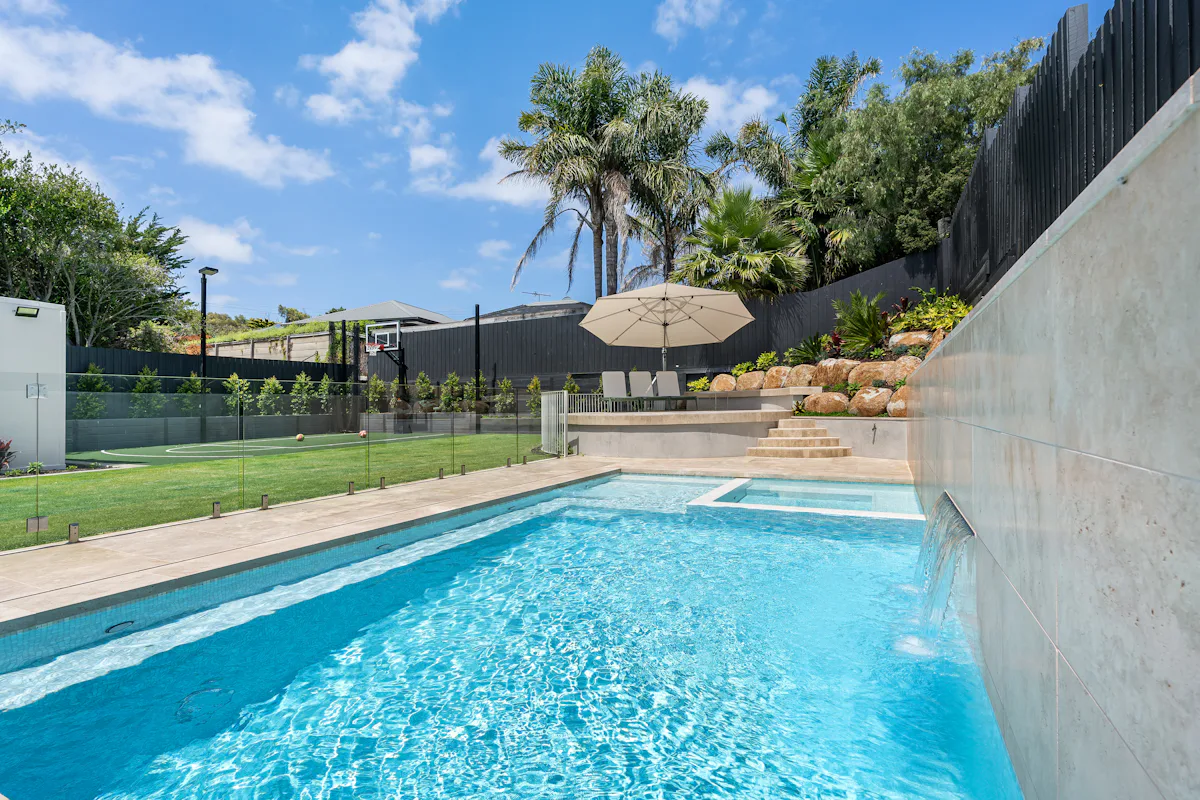
When a building permit is issued for a new or remodeled pool or spa at a private single-family home, the Swimming Pool Safety Act (Health and Safety Code section 115922) requires at least two of seven listed drowning prevention features. One of the seven is an enclosure that separates the pool from the house. Section 115923 says that enclosure must:
- be at least 60 inches tall,
- leave no more than 2 inches between the ground and the bottom of the fence,
- have no openings a 4-inch sphere can pass through,
- have no outside handholds or footholds a child under five could climb, and
- use gates that open outward from the pool, close and latch on their own, with the latch at least 60 inches up.
The city building department reviews pool barriers with the pool permit and may add its own requirements. We check before we build.
Which material works around a Stockton pool?
Aluminum is the go-to: it will not rust from splash-out, and vertical pickets are easy to space under 4 inches. Vinyl works when you want the pool screened, provided the outside face has no climbable rails. Steel is the strongest option but needs a well-maintained coating near chlorinated water.
Can my back-yard fence serve as the pool barrier?
Only if every part of it meets the same tests, including every gate. Horizontal rails on the outside, gaps under the boards from soil settling, and old gates that do not self-close are the usual reasons it falls short.
Planning a pool remodel?
Bring us in early. Fitting the enclosure into the pool plan costs less than adjusting a fence after inspection. Related: Stockton permit guide.