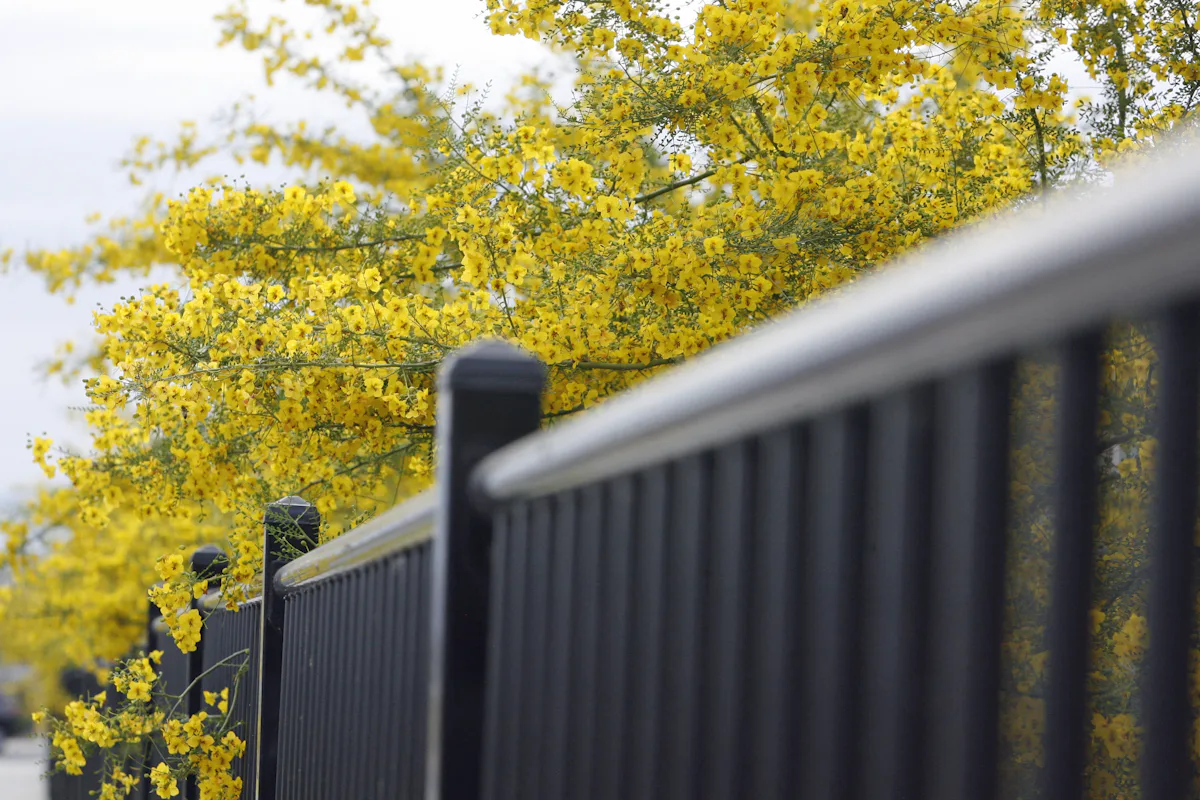
Why choose metal for a Stockton front yard?
Stockton gives decorative metal a height advantage. In front and street-side setbacks, a solid fence is held to 3 feet and an open fence to 4 feet, but decorative wrought iron or tubular steel can reach 5 feet, or 6 feet in the Magnolia Historic District overlay. If you want real security at the front of the property, metal is the way to get it legally.
Steel, iron or aluminum?
- Tubular steel is strong and affordable, and is the usual choice for front fences and drive gates. It needs a good coating to resist rust where sprinklers hit it.
- Wrought iron suits older homes in neighborhoods such as the Magnolia district, with heavier pickets and decorative detail.
- Aluminum never rusts, which makes it ideal around pools and in wet garden beds, though it is lighter and less rigid than steel.
Are there rules on posts and pillars?
Yes. For decorative metal fences in front setbacks, the code limits supporting posts to 18 inches square and 5 feet tall, with at least 7 feet between posts. One entry feature, such as an arbor or gateway, is allowed per lot at up to 10 feet tall. We design to those numbers from the start.
What does a metal fence cost?
Cost guides list aluminum at roughly $20 to $60 per linear foot installed and wrought iron or steel at about $30 to $85, as of October 2026. Custom scrollwork, taller panels and automated gates cost more.
Which metal suits your property?
Steel for security and drive gates, iron for period character, aluminum for pools and low upkeep. Pair any of them with a matching gate.