What kinds of farm fencing do you build?
- Woven field wire for sheep, goats and general livestock.
- Barbed wire for cattle on larger pasture, where the rules allow it.
- No-climb horse fence with small openings hooves cannot step through.
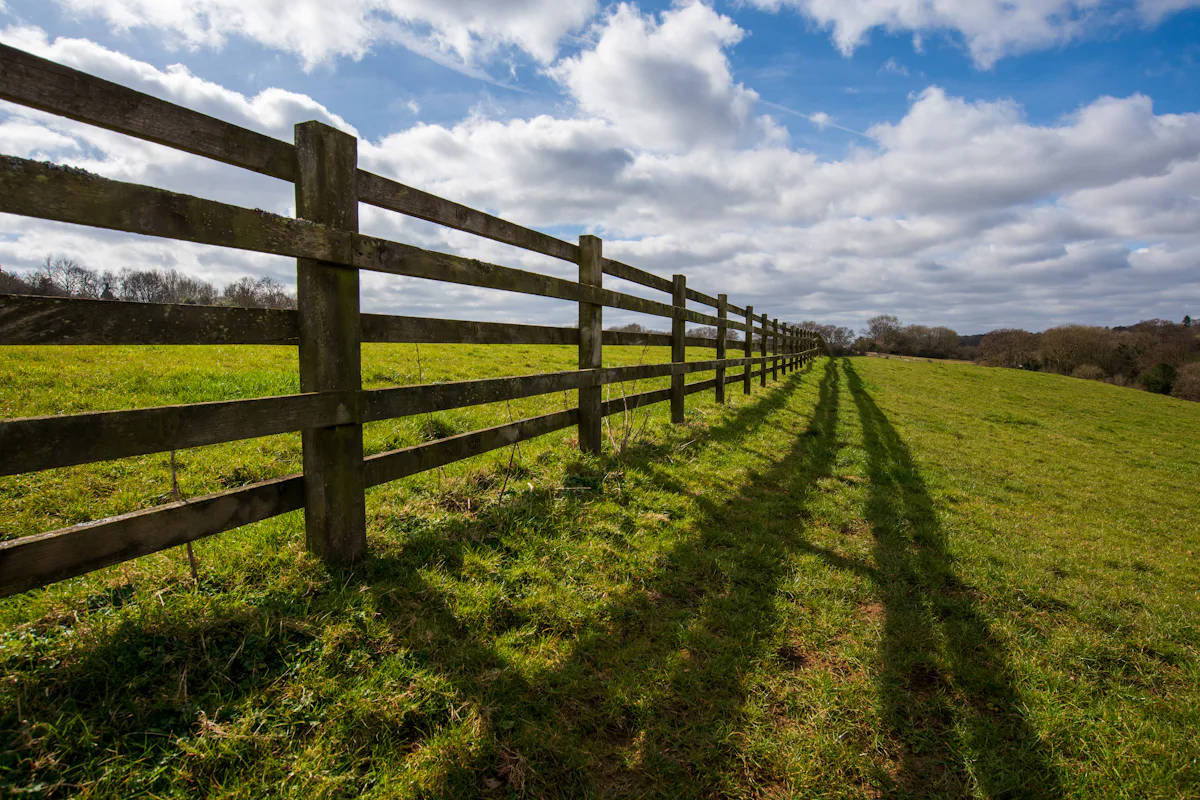
- Wood or vinyl post-and-rail for horse paddocks and the front of rural homesites.
- Pipe and heavy panel corrals for working pens and arenas.
- Orchard and vineyard perimeter fencing to keep out trespassers and deer.
What makes a farm fence last in Delta and Valley soil?
The corners. A wire fence is only as good as its end and corner assemblies, because they hold all the tension. We build H-braces or angle braces at every corner, end and gate, and set line posts at a spacing that matches the wire and the animals. Where ground stays wet in winter, deeper post holes and good drainage around the footing keep corners from pulling over.
How much does ranch fencing cost?
As of October 2026, a farm and ranch cost guide lists barbed and woven wire at only a couple of dollars per foot installed on long, open runs, with heavy pipe or panel corral work at about $13.50 to $40 per foot. Those figures leave out gates, corner bracing and clearing. Horse-safe wire and wood post-and-rail cost more; published ranges for post-and-rail run about $12 to $35 per foot. Short runs with many corners cost more per foot than long straight ones.
Are there rules for farm fences?
Yes, and they depend on where the parcel sits. Inside Stockton city limits, the Development Code bans barbed and razor wire in residential districts. Unincorporated farmland follows San Joaquin County's rules, and Lodi, Manteca, Tracy and Lathrop each have their own. We confirm which agency covers your parcel before we price the job.
Which ranch fence should you choose?
Choose woven wire for small livestock, no-climb for horses, barbed wire only for cattle on open range, and post-and-rail where looks matter as much as containment. Unsure? Read the farm fence guide.